Security staffing decisions are among the most consequential operational choices healthcare facility directors make. The right staffing model—the right number of officers, the right coverage model, the right balance between technology and human presence—directly affects workplace violence prevention outcomes, patient and staff safety perceptions, and operational costs that can run into millions of dollars annually.
Healthcare security staffing has no universal formula. Academic medical centers, rural critical access hospitals, suburban community hospitals, and large health systems all have different threat profiles, operational contexts, and resource constraints. But evidence-based principles from the International Association for Healthcare Security and Safety (IAHSS) and published best practices provide a framework for making defensible staffing decisions.
In-House vs. Contract Security: The Foundational Question
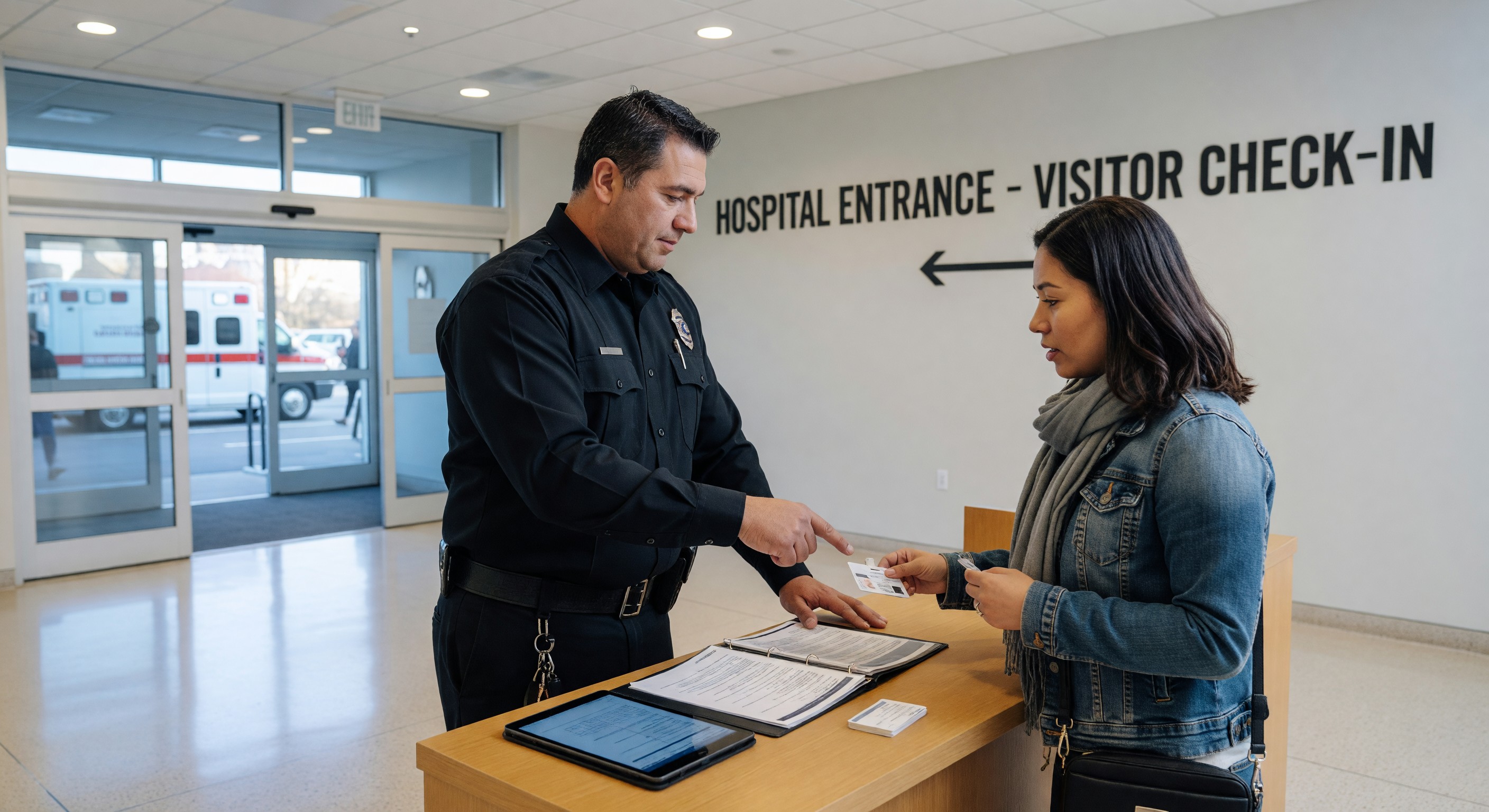
The first decision most healthcare facility directors face in security staffing is whether to operate an in-house security department or contract security services. Both models are viable and well-represented across the healthcare sector. The right choice depends on organizational values, operational requirements, and financial constraints.
In-House Security Programs In-house security officers are direct employees of the healthcare organization. They receive the same benefits, training, and HR management as other employees. They typically develop deeper institutional knowledge, build longer-term relationships with clinical staff, and have stronger organizational identity as part of the healthcare team.
In-house programs typically deliver higher officer quality and lower turnover than contract programs—turnover in healthcare security is a persistent operational problem, and direct employment relationships support retention better than contract arrangements. The tradeoff is higher direct labor cost (healthcare-equivalent benefits packages) and the management overhead of operating a security department.
Contract Security Programs Contract security vendors provide officers under service agreements, managing their own employment, payroll, scheduling, and HR functions. This transfers administrative burden and benefits costs to the vendor while retaining operational control of security functions.
Contract security is cost-effective for lower-complexity implementations—facilities requiring basic access control, visitor management, and patrol functions. For higher-complexity security environments requiring specialized healthcare security training, de-escalation expertise, and IAHSS certification, finding and retaining contract officers who meet the standard is increasingly challenging.
Many large health systems use a hybrid model: in-house leadership and specialized positions (security managers, investigators, specialized unit officers) supported by contract officers for basic patrol and access control functions.
IAHSS Standards as a Staffing Benchmark
The International Association for Healthcare Security and Safety provides the most widely accepted professional standards for healthcare security staffing. IAHSS basic training certification and their security staffing guidelines provide benchmarks that healthcare facility directors can reference in justifying staffing levels.
IAHSS staffing guidelines address:
- Minimum post coverage requirements for various healthcare setting types
- Officer-to-patient ratio considerations for different risk environments
- Coverage requirements for high-risk areas (emergency department, psychiatric, neonatal)
- Supervisor-to-officer ratios
- Specialized training requirements for officers assigned to specific environments
IAHSS certification programs—Basic Security Officer, Security Professional, and Security Management—provide a credential framework that supports hiring standards and professional development planning.
Coverage Planning by Healthcare Environment
Security coverage needs vary significantly across the healthcare campus. Effective coverage planning allocates resources based on documented risk, not just historical habit.
Emergency Department The ED is consistently the highest-risk environment for workplace violence in healthcare settings. IAHSS and published research support dedicated security officer presence in the ED at all times the department is in operation. Large ED environments typically require multiple officers with designated patrol zones.
The OSHA workplace violence prevention rule reinforces this standard: ED environments with documented violence history require comprehensive physical environment and staffing controls. Fixed officer positions in or adjacent to triage and waiting areas are typically necessary for compliance with OSHA’s engineering and administrative control requirements.
Psychiatric and Behavioral Health Units Inpatient psychiatric units require specialized security officer training in de-escalation, restraint, and therapeutic communication techniques. IAHSS and The Joint Commission standards require that psychiatric unit security personnel receive specific training appropriate to the clinical environment. Coverage requirements depend on unit census and acuity, but 24/7 dedicated coverage is typical for inpatient psychiatric settings.
Maternity and Neonatal Areas Infant security systems provide technology-based protection, but human security presence augments these systems for high-risk situations. Dedicated or regularly patrolling security coverage of labor and delivery and neonatal intensive care areas is standard practice.
General Campus Patrol Campus-wide patrol coverage typically uses vehicle and foot patrols on defined schedules. Coverage frequency should be calibrated to the campus size and documented incident patterns, with higher-frequency coverage of areas with historical security concerns.
Technology’s Role in Staffing Optimization
Security technology—cameras, access control, AI analytics, duress systems—doesn’t replace security staff, but it allows existing staff to be more effective. Understanding how technology affects staffing requirements is important for both staffing decisions and technology investment justification.
Camera Coverage and Remote Monitoring Comprehensive camera coverage with centralized monitoring allows a single officer in the security command center to maintain surveillance over the entire campus simultaneously. This creates a “force multiplier” effect—one monitoring officer can see more than dozens of patrol officers. Investing in camera infrastructure and monitoring capability can support wider patrol zone assignments for field officers without reducing overall situational awareness.
AI Anomaly Detection AI security analytics that proactively surface suspicious access events and video behaviors allow security managers to prioritize officer attention more effectively. Rather than reviewing hundreds of hours of routine video, AI flags specific events for human review—allowing the same analytic capacity to cover significantly more area.
Duress System Coverage Effective duress systems that provide immediate, located alerts for staff in distress allow security officers to respond with precision rather than conducting search-based responses. This reduces response time and allows officers to cover wider geographic areas with confidence that staff can summon help immediately when needed.
Training Requirements for Healthcare Security Officers
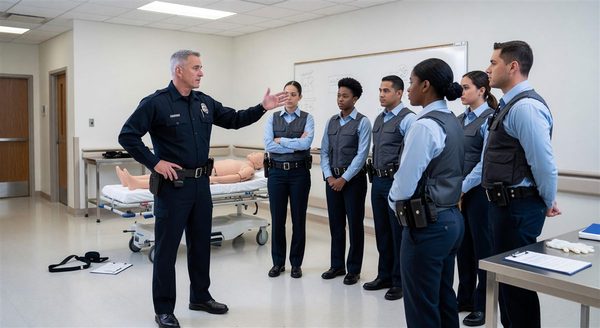
Healthcare security requires specialized training that distinguishes healthcare security from general security practice. Key training areas:
De-escalation Evidence-based de-escalation training—verbal techniques for reducing patient and visitor agitation before physical intervention is required—is the highest-impact training investment for healthcare security. Organizations with strong de-escalation training programs consistently report lower rates of physical interventions, fewer officer injuries, and lower patient and visitor harm.
Healthcare Environment Awareness Healthcare security officers must understand clinical environments, infection control requirements, patient confidentiality obligations, and the difference between security responses appropriate in a healthcare context versus a commercial security context.
Restraint and Use of Force Healthcare-specific use of force training covers restraint techniques appropriate for patient environments, applicable regulatory requirements under CMS and the Joint Commission related to patient restraint, and the legal and liability implications of use of force in healthcare settings.
Frequently Asked Questions
What’s the recommended staffing ratio for emergency department security? IAHSS guidelines don’t specify a universal ratio because ED volume and acuity vary dramatically. However, dedicated officer presence in the ED whenever the department is open is the standard, with additional officers as volume increases. Research published in healthcare security literature suggests dedicated security presence during peak hours (typically 2 PM–2 AM in most emergency departments) as a minimum, with 24-hour coverage in high-volume urban EDs.
How should healthcare facilities address the security officer shortage? The security officer labor market is tight across healthcare and other sectors. Effective responses include competitive compensation benchmarked to the local healthcare labor market, investment in training and certification that creates career development pathways, technology investment that reduces the coverage burden on existing staff, and creative scheduling that accommodates officer preferences within coverage requirements.
Does the OSHA workplace violence rule require specific security staffing levels? The rule does not specify numeric staffing requirements. Instead, it requires that employers conduct a hazard assessment and implement controls—including administrative controls like staffing—sufficient to address identified risks. For facilities where the hazard assessment identifies security staffing gaps as a contributing factor to violence risk, additional staffing is an appropriate administrative control that the employer must implement or document why it’s not feasible.
How should healthcare facilities evaluate the performance of their security programs? Key performance indicators for healthcare security programs include: incident rate trends (violence, theft, unauthorized access), officer response time to incidents and alarms, training completion rates, voluntary turnover rates for security staff, and annual assessment findings from independent security reviews. Benchmark performance against IAHSS or published healthcare security data where available.