Hospital pharmacies are among the most security-sensitive areas in any healthcare facility. They house controlled substances subject to Drug Enforcement Administration (DEA) regulation, high-value medications that are targets for theft, and sensitive compounding operations that require environmental protection. A security failure in the pharmacy carries consequences ranging from patient harm from medication errors to federal criminal prosecution for diversion.
Facility directors play a critical infrastructure role in pharmacy security — providing the physical access control, video surveillance, and environmental systems that pharmacy and compliance teams rely on to meet their regulatory obligations.
Regulatory Framework for Pharmacy Security
DEA Regulations (21 CFR Part 1301): DEA regulations govern the storage, handling, and accountability of controlled substances (Schedule II-V). Physical security requirements for controlled substance storage include:
- Schedule II substances must be stored in substantially constructed locked cabinets or safe
- Vaults or safes meeting specific construction standards are required for high-volume controlled substance storage
- Access to controlled substance storage must be limited to authorized individuals
- Records of all receipts, dispensing, and inventory of controlled substances must be maintained
Joint Commission MM.01.01.03: Pharmacy standard MM.01.01.03 requires hospitals to have a policy for the storage of controlled substances, including security requirements that align with DEA regulations.
USP 797 and 800: While primarily focused on sterile compounding quality standards, USP 797 and 800 specify cleanroom environmental requirements (air quality, pressure differentials, temperature) that are infrastructure responsibilities closely related to physical security design.
Physical Access Control for Pharmacy Areas
Pharmacy Entry Control
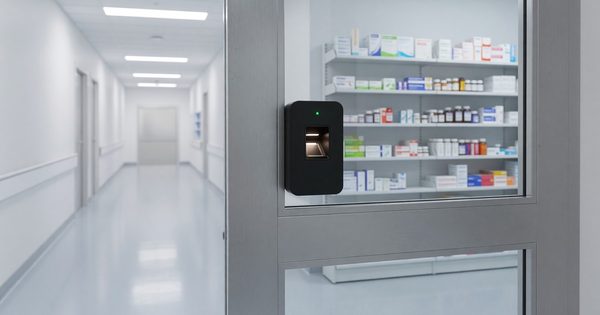
The main pharmacy should be access-controlled with at minimum badge-reader access for authorized pharmacy personnel. Best practice includes:
- Biometric access in high-security pharmacies, eliminating credential sharing risks
- Anti-passback configuration to prevent one person from entering and then passing their badge back to an unauthorized individual
- Mantrap vestibule for satellite pharmacies or cleanroom entries where a contamination barrier is required
- Video at entry points with real-time monitoring capability and recording retention sufficient for DEA audit purposes (typically minimum 30 days)
Controlled Substance Vault and Cassette Security
Automated dispensing cabinets (ADCs — Pyxis, Omnicell) have become the primary point-of-use controlled substance storage in most hospitals. Facility infrastructure supporting ADC security includes:
- ADC physical mounting to prevent removal — cabinets should be anchored to walls or floors per manufacturer specifications
- Network connectivity for ADC access logging and real-time transaction monitoring
- Power reliability — ADCs must be on the essential electrical system (EES) or have battery backup to prevent medication access failures during power interruptions
- Physical location in nurse medication rooms with access-controlled entry
Bulk controlled substance storage in the central pharmacy requires:
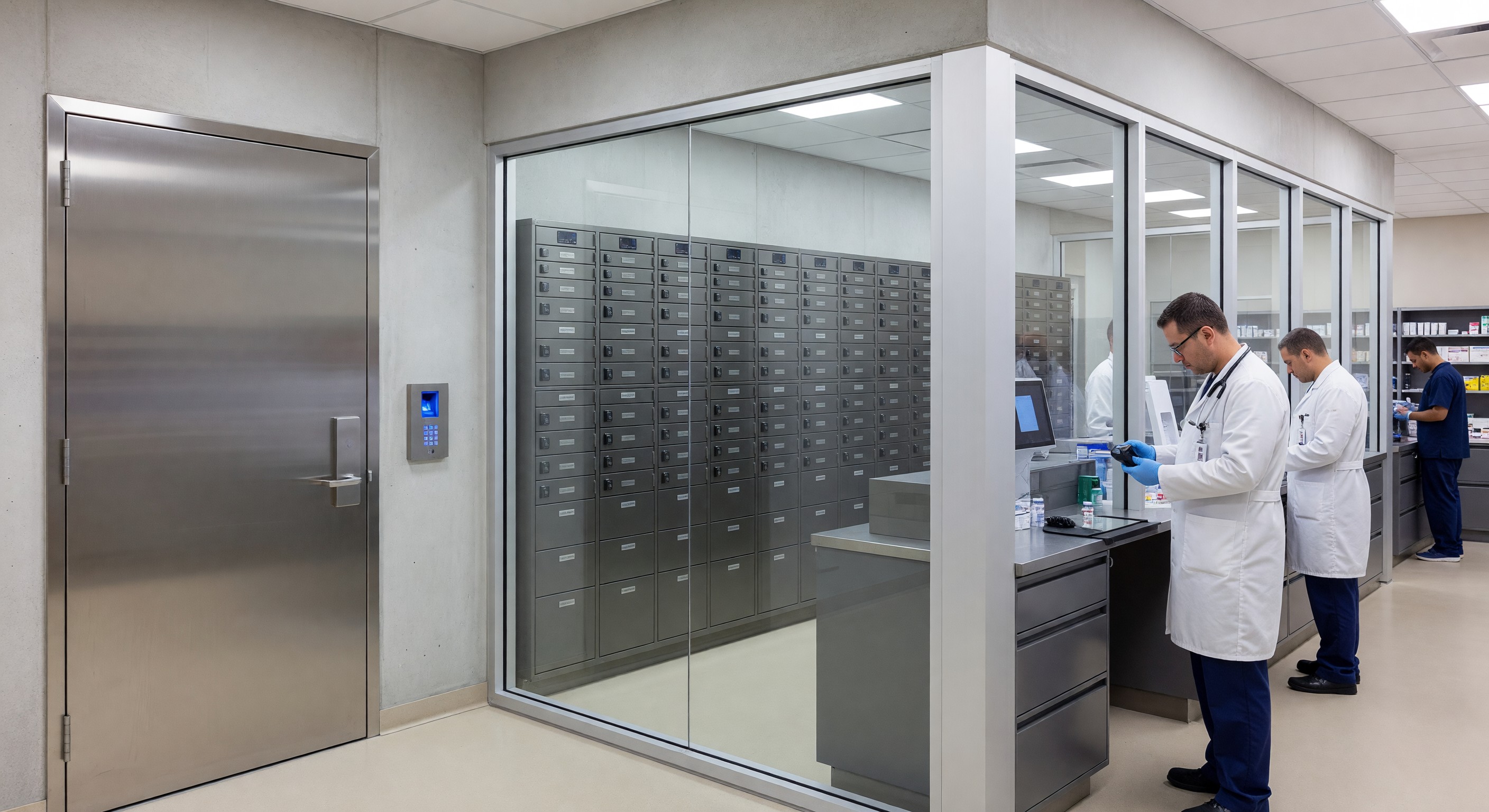
- DEA-compliant vault or safe for Schedule II substances
- Separate locked storage for Schedule III-V substances
- Two-person access rule enforcement through access control logging — entries for controlled substance vault access should require acknowledgment by two authorized personnel, with dual-person logging captured in the access control system
Diversion Detection and Prevention
Medication diversion — the theft of controlled substances by staff for personal use or resale — is a significant patient safety and regulatory compliance risk. Physical security infrastructure supports diversion prevention programs:
Video coverage of dispensing areas: Cameras positioned to capture ADC interactions, pharmacy dispensing counters, and waste disposal areas provide audit capability when diversion is suspected. Camera placement should be designed with pharmacy management and compliance to ensure coverage without compromising patient privacy where visible in patient care areas.
Access logging for audit: Access control systems that log every entry into pharmacy areas, with timestamp and individual identity, provide the audit trail needed to correlate physical access with controlled substance transaction anomalies identified by pharmacy diversion analytics software (systems like Omnicell Controlled Substance Management, BD Pyxis ES with diversion analytics, or third-party tools like RxAuditor).
Waste disposal monitoring: Wasted medications — partial doses documented as discarded rather than administered — are a primary diversion vector. Physical infrastructure for controlled substance waste (witnessed waste with dual-employee confirmation at ADC or dedicated waste units) should be positioned where camera coverage captures the interaction.
Night and After-Hours Pharmacy Security
After-hours pharmacy access presents elevated security risk when staffing is reduced. Physical security measures for after-hours operations:
- On-call pharmacist access: Pharmacists on call may need to access the pharmacy outside normal hours. Credential access with audit logging ensures individual accountability.
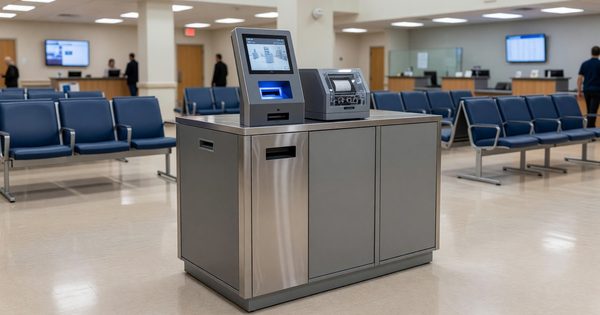
- Night dispense windows: Some hospitals use pharmacy pass-through windows with intercom and camera verification to dispense after-hours medications without full pharmacy entry for non-pharmacy staff.
- Alarm systems: Central pharmacy and satellite pharmacy areas should have intrusion detection alarm systems monitored 24/7, with appropriate response protocol for after-hours alarm activation.
Satellite Pharmacy and Medication Room Security
Satellite pharmacies and medication rooms throughout the hospital extend the controlled substance custody chain beyond the central pharmacy. Physical security for these areas:
- Badge access control for all medication rooms — not master key access, which creates an audit gap
- Cameras in satellite pharmacy areas consistent with central pharmacy standards
- ADC placement with physical security anchoring
- Regular physical inventory reconciliation coordinated between satellite pharmacy and central pharmacy
Documentation and Regulatory Audit Readiness
DEA may conduct unannounced inspections of controlled substance handling and storage. Pharmacy and compliance teams need documentation that access control records support:
- Individual-level access logs showing who entered pharmacy areas and when
- Video retention consistent with audit needs
- Documentation that access rights are reviewed and terminated when personnel separate
- Physical security standards documentation (vault specifications, ADC anchoring records) available for DEA review
Frequently Asked Questions
Does DEA specify what type of lock is required on controlled substance storage? Yes. 21 CFR 1301.75 specifies storage requirements for controlled substances. Schedule II substances require a safe, steel cabinet, or vault meeting specific construction standards. The regulation specifies minimum steel gauge, locking mechanism type, and — for vaults — construction specifications. DEA’s Practitioner’s Manual provides guidance on compliant storage options.
Who is responsible for pharmacy access control records — pharmacy, security, or compliance? Physical access control records are typically maintained by security or IT (depending on the access control system). Pharmacy is responsible for the DEA-required controlled substance transaction records. Compliance uses access control records to correlate with controlled substance transactions during diversion investigations. All three departments need defined access to records relevant to their role.
What are the penalties for a DEA audit finding related to physical security deficiencies? DEA enforcement for physical security deficiencies can range from written warnings and corrective action plans to suspension or revocation of the facility’s DEA registration — which would prevent the hospital from handling controlled substances. Criminal penalties can apply when diversion is found. Most facilities resolve physical security findings through corrective action plans; criminal prosecution is reserved for cases involving significant diversion or deliberate regulatory evasion.
Can hospitals use standard commercial security cameras for pharmacy surveillance, or is healthcare-specific equipment required? Standard commercial security cameras are acceptable for pharmacy surveillance. Key requirements are: sufficient resolution to identify individuals clearly, appropriate field of view to cover dispensing and storage areas, video retention for a period sufficient for DEA audit purposes (consult your compliance team and DEA requirements), and access controls on the video management system to ensure chain-of-custody integrity for footage used in investigations.