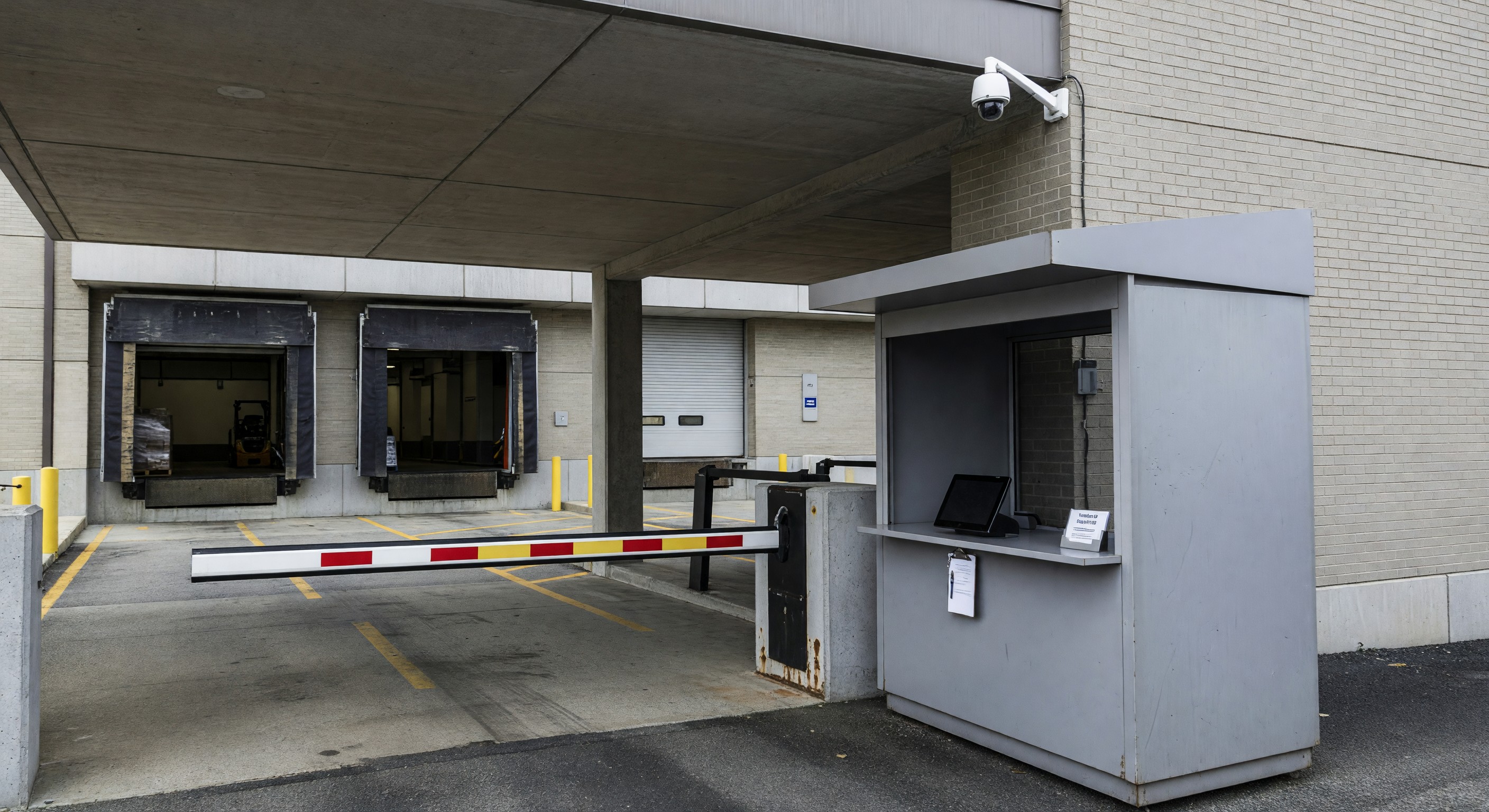
Loading docks and service entrances are the most frequently overlooked access security vulnerabilities in hospital buildings. While main patient entrances and clinical areas receive systematic access control attention, the side door or the loading dock — where dozens of vendors, contractors, delivery drivers, and maintenance staff pass daily — often operates on an honor system or minimal control.
This matters for several reasons: loading docks are direct routes into pharmacy supply corridors, sterile supply areas, and internal distribution systems. Unauthorized access through a service entrance can bypass all of the access control investment at patient-facing entrances. And the volume and variety of traffic makes detection of unauthorized individuals more difficult than at controlled clinical entrances.
The Loading Dock Access Profile
Hospital loading docks receive a characteristic mix of traffic daily:
- Medical supply distributors (daily or multi-daily)
- Food service distributors
- Linen service drivers
- Pharmacy wholesalers (with controlled substance deliveries)
- Medical device and equipment vendors
- Laboratory supply and reagent deliveries
- Furniture and equipment movers
- Contracted maintenance, cleaning, and repair vendors
- Waste removal contractors
Each category has different access needs, different security risk profiles, and different frequency of visits. A regular supply driver who visits twice daily is a known quantity. A one-time contractor doing a specific repair is not.
Access Control Architecture for Service Areas
Perimeter control — The loading dock area should be physically separated from general traffic. A secured vehicle gate or barrier that requires credential or intercom authorization limits who can approach the dock. This is the first layer.
Dock-level access control — The actual building entry at dock level should require credential presentation. Door reader systems with intercom allow a receiving dock employee to visually verify the arriving vendor via camera and remotely open the door. This eliminates the practice of propping dock doors for convenience.
Internal corridor separation — Dock access should route vendors through a controlled receiving area, not directly into clinical corridors. A designated receiving area with an access control boundary separating it from the clinical and supply distribution area limits how far an unauthorized individual can penetrate before being challenged.
Vendor staging area — A designated space where delivery drivers can stage goods awaiting receiving staff processing, without requiring the driver to enter the internal distribution system. The staging area is controlled at its boundary; drivers hand off to receiving staff there.
Vendor Credentialing and Access Management
The most significant vulnerability in loading dock security is unverified vendor access. A delivery driver who knows the dock schedule can gain building access by arriving at an opportune time and appearing purposeful. Formal vendor credentialing addresses this:
Approved vendor registry — Maintain a list of all authorized vendors with their access authorization, days and hours of authorized access, and the products or services they are delivering. New vendors must be added to the registry before their first authorized visit.
Advance delivery scheduling — Require vendors to schedule deliveries in advance, specifying the product and quantity. This allows receiving staff to prepare for expected deliveries and creates a mechanism to identify unscheduled visitors.
Photo ID requirement — Delivery drivers who are not known to the receiving staff should present photo ID that is verified against the approved vendor registry. High-risk deliveries (controlled substance pharmaceutical deliveries, high-value medical equipment) should require additional verification steps.
Visitor badges — Issue time-limited visitor badges to all vendor representatives who enter the internal building areas beyond the receiving dock.
Pharmaceutical Supply Security
Controlled substance deliveries to the pharmacy through the loading dock require additional security measures per DEA regulations:
- Designated pharmaceutical receiving area separate from general receiving
- Two-person receipt process for controlled substance deliveries
- Documentation of delivery person identity, vehicle, and cargo at time of receipt
- Immediate secure storage of controlled substance inventory upon receipt
- Reporting of any suspected diversion, tampering, or theft immediately to DEA and pharmacy leadership
Pharmacy supply deliveries should not be processed in the general receiving area where other vendor traffic creates distraction and observation opportunities.
After-Hours and Weekend Access Management
Regular receiving hours are supported by staffed receiving operations. After-hours deliveries — sometimes required for emergency supply or equipment needs — must be managed without creating an unmonitored access vulnerability.
Options for after-hours service access:
- On-call receiving staff who can be paged for after-hours access authorization
- Security staff trained and authorized to receive specific pre-approved delivery types
- Secure key management (locked key box with logged access) for authorized regular vendors who may need after-hours access for specific routine operations (ice, linen exchange)
- A written policy that defines what access is authorized after hours and by whom
Integration with Supply Chain Systems
Modern hospital supply chain platforms (Workday Supply Chain, Oracle SCM, GHX) can generate advance shipment notifications that integrate with facility access control systems. When a vendor’s ASN is received for a scheduled delivery, the access control system can be pre-authorized for the specific vendor credentials during the scheduled delivery window.
This integration reduces the administrative burden of manual access authorization while maintaining documentation of every authorized access event. The ASN triggers the access authorization; the actual access event is logged against the vendor record.
Frequently Asked Questions
How do we manage the many informal deliveries that hospital departments make directly with vendors, bypassing central receiving? Department-direct deliveries (a department assistant who calls a vendor and arranges a delivery to be dropped off at their floor) are a common access control vulnerability. Establish and enforce a policy requiring that all external vendor deliveries flow through central receiving. Communicate the policy to department heads. For emergency supply needs, central receiving should be able to process same-day and emergency deliveries with appropriate priority.
How do we handle a vendor who becomes hostile when asked for ID at the loading dock? A vendor who refuses reasonable identity verification has provided information about themselves. Document the refusal, contact the vendor’s company to report the incident, and consider whether the vendor relationship needs to be managed through the procurement department with formal expectations communicated to the vendor. Receiving staff should be trained in de-escalation techniques and should not be put in a position of physical confrontation over credential requirements.
What CCTV coverage is appropriate for loading dock and service areas? At minimum: camera coverage of the dock approach, the loading dock vehicle bays, and the building entry at dock level. The camera coverage should provide sufficient resolution to identify individuals and vehicle license plates. Retention appropriate for investigation requirements (30+ days). Live monitoring or motion-alert-based review by security. For pharmaceutical receiving areas, camera coverage of the actual receiving transaction is appropriate.
Are there specific regulations governing hospital loading dock design? Fire codes require that loading docks that connect to the hospital building comply with fire separation requirements, including appropriate fire-rated construction and door assemblies. ADA requires accessible loading areas for those requiring them. Local building codes may have additional requirements for dock design, ventilation (vehicle exhaust), and sprinkler coverage.