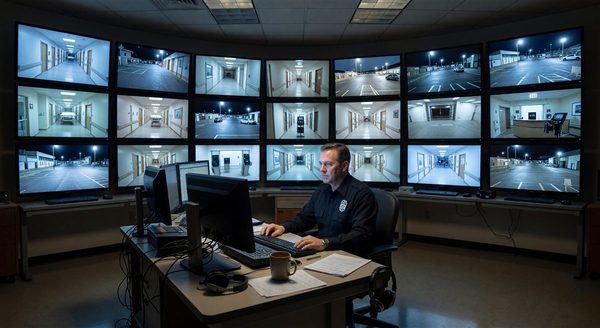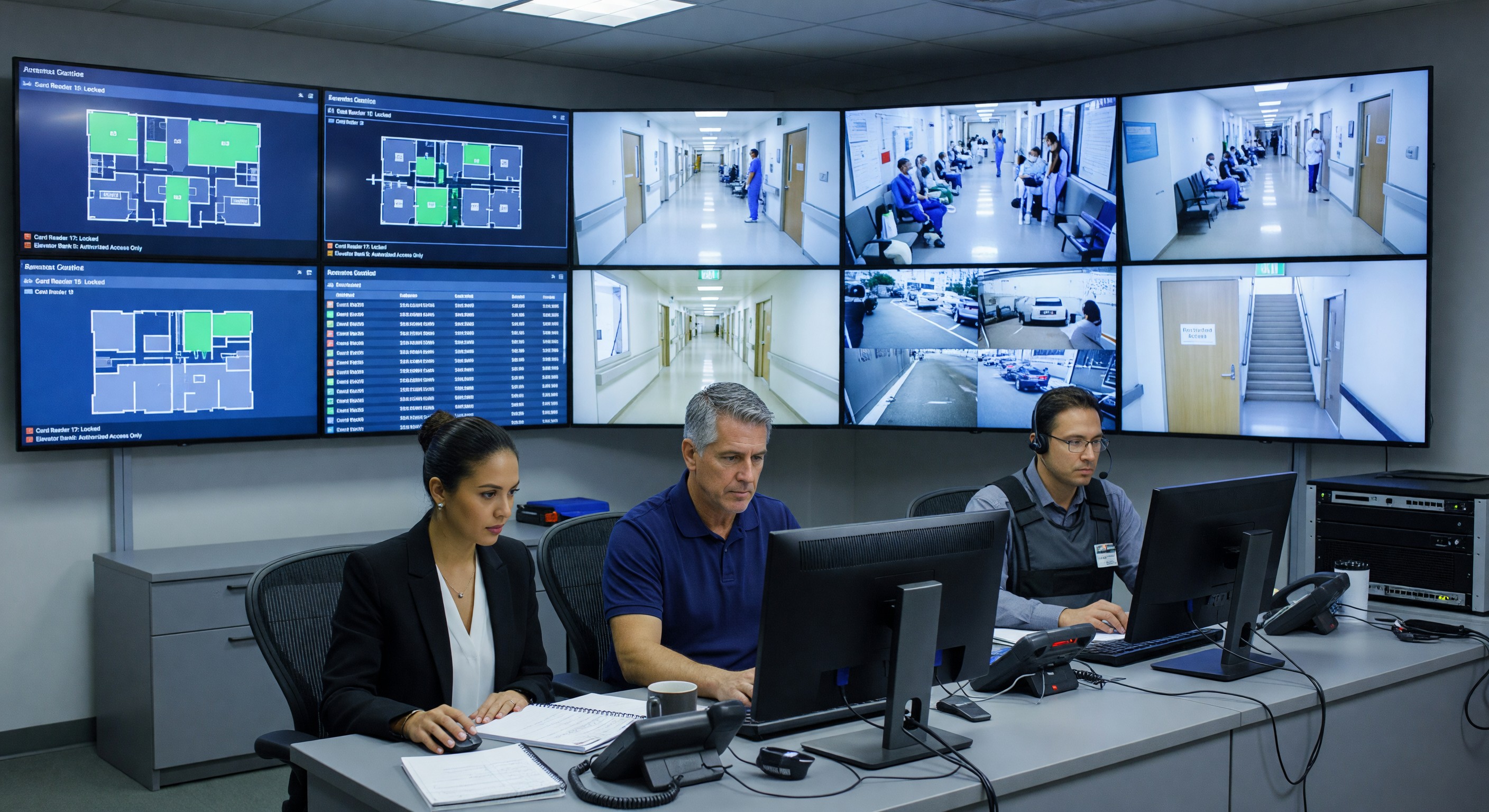
Healthcare facility security has historically been managed through separate, siloed technology systems. Access control ran on one platform, video surveillance on another, intrusion detection on a third, and emergency communications on a fourth. Security staff navigated between multiple interfaces, manually correlating events across systems to build situational awareness. This fragmented approach works—barely—in simple environments, but fails in the complex, high-volume security environment of a large healthcare campus.
Modern healthcare security programs are moving toward integrated security management platforms that present data from multiple systems through a unified interface, enabling faster response times, more effective investigation, and significantly better use of security staff resources.
The Case for Integration
The operational argument for integrated security is straightforward: most significant security events in healthcare facilities involve multiple systems simultaneously. An unauthorized access attempt at a secured medication storage door triggers an access control alert, is captured on a camera adjacent to the door, and may also trigger a motion sensor in the adjacent corridor. Without integration, security staff receive three separate alerts from three separate systems and must manually correlate them to understand what happened.
With integration, a single alert appears in the security management platform with the access control event, the associated camera feed already queued to the relevant timestamp, and adjacent sensor data automatically included. Response time decreases, context increases, and the probability of an effective intervention improves.
The Joint Commission’s EC.02.01.01 standard requires healthcare facilities to maintain security systems that protect patients, staff, and property. While the standard doesn’t mandate integrated systems, it does require effective security outcomes—and integrated platforms consistently demonstrate superior performance against those outcomes.
Integration Architecture Options
Healthcare security integration can be implemented through several architectural approaches, each with different cost and complexity profiles:
Physical Security Information Management (PSIM) Platforms PSIM platforms are specifically designed to integrate multiple security systems through a unified management interface. They connect to access control, video, intrusion, fire alarm, and other systems through standard protocols and proprietary integrations, presenting a unified event stream with correlated data from all connected systems.
PSIM platforms offer the most comprehensive integration capability but require significant implementation investment and ongoing platform maintenance. They are most cost-effective in large academic medical centers or health systems with hundreds of cameras and thousands of access points.
Video Management System (VMS) as Integration Hub Enterprise video management systems from Genetec, Milestone, Avigilon, and others have evolved to include access control modules, analytics integration, and alarm management capabilities that go well beyond video recording and playback. For many healthcare facilities, a VMS-centric integration approach—where the VMS serves as the primary unified platform—provides 80% of the integration benefit at lower cost and complexity than a dedicated PSIM.
Access Control Platform Extensions Major access control platforms (Lenel S2, Software House, Honeywell Pro-Watch) have similarly extended their capabilities to include video integration, visitor management, and analytics. For facilities where access control is the dominant security function, building integration around the access control platform may be the most natural architecture.
API-Based Point Integrations Rather than implementing a comprehensive integration platform, some facilities build specific point integrations between systems using APIs—connecting access control event data to the VMS for camera correlation, for example, without implementing a full PSIM layer. This approach is more flexible and lower cost initially, but becomes increasingly complex to maintain as the number of integrated systems grows.
Critical Integration Points for Healthcare
Regardless of architecture, certain integration points deliver the highest operational value in healthcare security:
Access Control + Video Every access event—particularly at high-security doors—should automatically trigger display of the associated camera feed at the time of the event. Investigators reviewing an access anomaly should be able to click an event record and immediately see video confirmation of who presented the credential.
Alarm + Video Intrusion alarms, panic buttons, and door-propped alerts should automatically call up the relevant camera feeds in the security command center. Staff responding to a panic button in a patient room should see video from that corridor before they arrive.
Visitor Management + Access Control Visitor credential records should integrate with access control to automatically create temporary access permissions that expire at the end of the visit period, without requiring manual programming for each visitor.
Communication Systems + Security Events Mass notification systems, overhead paging, and two-way radio systems should be triggerable from the security management platform during emergency events, allowing a single operator to coordinate security response across all communication channels simultaneously.
Workplace Violence Prevention Integration
OSHA’s healthcare workplace violence prevention rule requires healthcare employers to identify and mitigate workplace violence hazards. Integrated security systems support this requirement through several specific capabilities:
Panic Button Integration Fixed panic buttons at nursing stations, examination rooms, and registration desks should integrate with the security management platform to generate immediate alerts with location information, simultaneously calling up relevant camera feeds and notifying response personnel through the communication system.
Duress Code Integration Door access systems can be configured to recognize duress codes—alternative PINs that grant access while simultaneously generating a silent alarm. This allows staff under threat to open a secured door for an aggressor while alerting security.
Incident Documentation Integrated security platforms create comprehensive incident documentation—access logs, video timestamps, communication records—that supports the incident investigation and reporting requirements of OSHA’s workplace violence prevention standard.
Cybersecurity Considerations for Integrated Systems
Integration creates cybersecurity risks that siloed systems don’t present. When an attacker compromises one integrated system, they may gain lateral access to all connected systems. Healthcare security directors must ensure that integrated security platforms are included in the organization’s cybersecurity risk management program.
Key cybersecurity considerations for integrated security systems:
- Network segmentation between the security technology network and clinical IT networks
- Strong authentication requirements for security management platform access (multi-factor authentication required)
- Encrypted communication between all integrated system components
- Vendor access controls for remote maintenance and support
- Regular penetration testing of integrated security infrastructure
Frequently Asked Questions
How should healthcare facilities approach migrating from siloed legacy systems to an integrated platform without disrupting operations? Phased migration is the standard approach. Begin by implementing the integration platform alongside existing systems—adding camera integration with access control first, then extending integration to additional systems as each phase is proven. This avoids the operational risk of a complete system cutover while progressively delivering integration benefits.
What’s the realistic timeline for implementing an integrated security platform in a large hospital? Implementation timelines vary significantly by scope and complexity. A single-campus integration project connecting access control, VMS, and intrusion detection typically runs 6–12 months from platform selection to full operation. Multi-campus health system integrations may require 18–36 months for phased deployment across all locations.
How do integrated security systems handle system failures in one component? Well-designed integrated systems are architected to degrade gracefully—if the access control system goes offline, video management should continue to function independently. The integration layer should include health monitoring that generates alerts when connected systems become unavailable. Healthcare facilities should document manual backup procedures for all critical security functions in the event of integrated platform failures.
Can integrated security systems satisfy Joint Commission security documentation requirements? Yes—integrated platforms typically provide superior documentation for Joint Commission surveys compared to separate systems. Unified event logs with cross-system correlation, automated incident report generation, and comprehensive audit trails for all security events create a documentation record that supports EC standard compliance more effectively than logs from siloed systems.