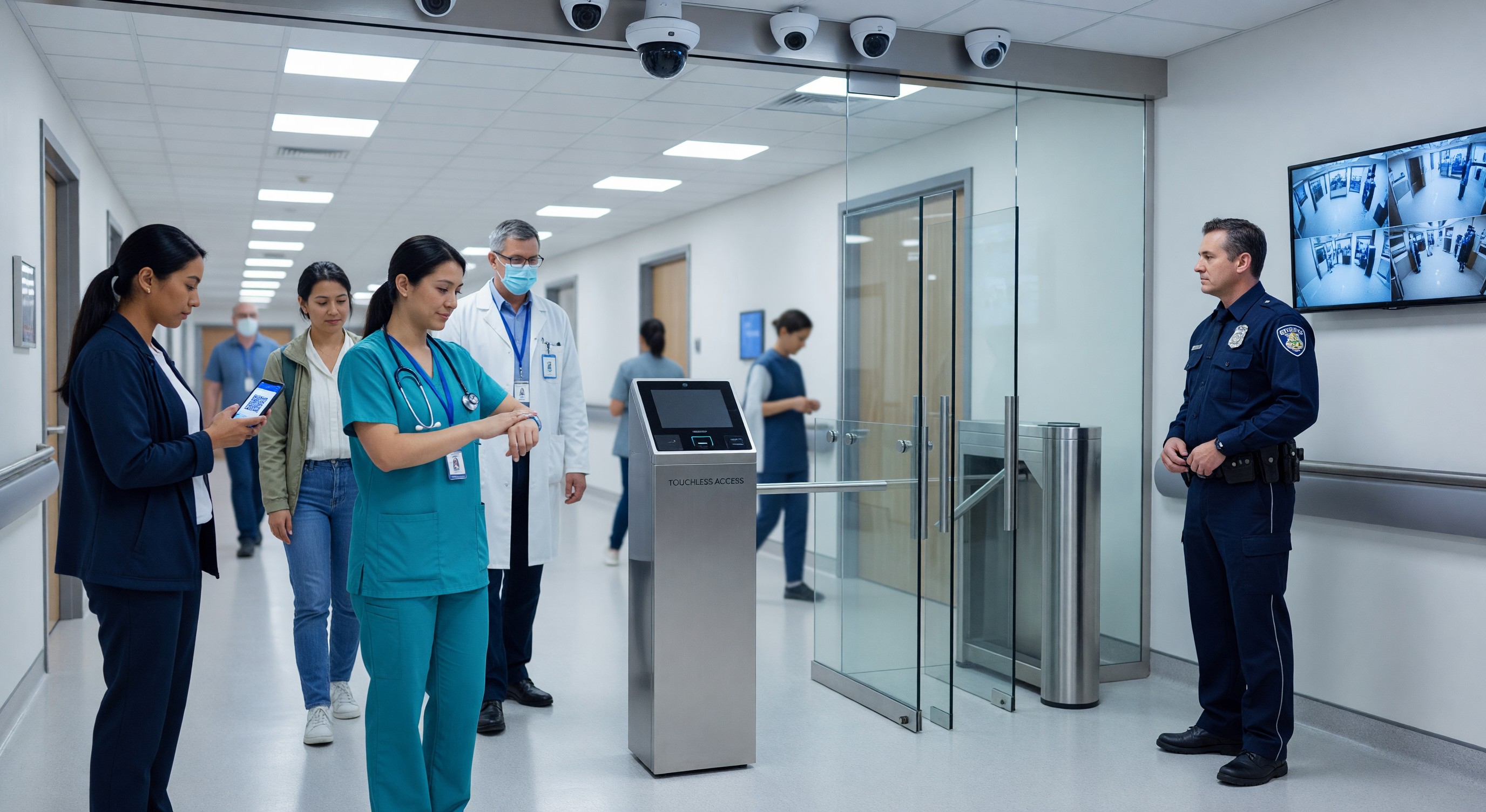
Healthcare access control is evolving faster than at any point in the past two decades. The combination of cloud computing maturity, AI analytics availability, mobile computing ubiquity, and heightened regulatory attention to workplace violence and patient safety has compressed what might have been a decade of technology evolution into three years of accelerated adoption.
For healthcare security directors planning capital budgets and security strategy through 2026 and beyond, understanding which trends represent durable operational improvements versus passing technology enthusiasm is essential for making sound investment decisions.
Cloud-Native Access Control Is Now the Default Recommendation
Three years ago, cloud-based access control was a legitimate but nascent alternative to on-premises systems in healthcare. Today, for new installations and major system replacements, cloud-native platforms are the default recommendation for most healthcare facilities that aren’t subject to specific data sovereignty or network constraints.
The operational case has solidified: multi-site credential management, automatic software updates, mobile administration capability, and reduced IT infrastructure overhead deliver measurable benefits over on-premises alternatives. The cybersecurity case has similarly matured—major cloud access control vendors have invested significantly in security certification (SOC 2 Type II, ISO 27001) that many on-premises deployments cannot match.
The remaining use cases for on-premises systems are real but narrowing: facilities with poor internet connectivity at every door, healthcare organizations subject to data residency requirements that preclude cloud storage, and facilities with significant existing on-premises infrastructure that makes the economics of replacement unfavorable.
AI-Powered Anomaly Detection Is Moving from Pilot to Standard
AI access anomaly detection—identifying statistically unusual access patterns that may indicate security risks—has moved from research and pilot programs into operational deployment at a growing number of health systems. The technology maturity now supports production deployment with acceptable false positive rates.
What’s driving healthcare adoption in 2025-2026:
Credential Sharing Detection AI anomaly detection that flags credential sharing patterns—where a single credential is used at different locations faster than physically possible—is proving effective at identifying a persistent healthcare security problem. Credential sharing in healthcare ranges from informal convenience (sharing a badge with a colleague) to organized access fraud.
After-Hours Access Monitoring AI monitoring of after-hours access to sensitive areas—pharmacy, medication storage, research labs—can detect patterns that manual log review misses. Access at 2 AM by someone whose normal shift ends at 11 PM is a meaningful anomaly that deserves investigation; manual review of thousands of daily access events rarely catches these patterns consistently.
Insider Threat Indicators The intersection of access anomaly detection and medication diversion detection is attracting specific healthcare interest. AI that correlates unusual pharmacy and medication room access patterns with controlled substance inventory discrepancies provides earlier detection signals than traditional diversion monitoring programs.
Biometric Integration Is Expanding in Specific High-Security Applications
Despite broader market caution about biometric data privacy, healthcare facilities are expanding biometric access control in specific high-security applications where the security benefit justifies the data governance investment.
Pharmacy and Controlled Substance Access The Drug Enforcement Administration’s requirements for controlled substance storage and the documented problem of healthcare diversion have made pharmacy access control a priority application for multi-factor authentication including biometrics. Fingerprint or vein pattern readers that require both a card credential and a biometric match for pharmacy entry are increasingly common in new and renovated pharmacy facilities.
Operating Suite and Sterile Processing Access Sterile environments where gloving requirements make PIN entry impractical are adopting iris recognition and contactless fingerprint readers that work with gloved hands or at a short distance. The ROI argument combines infection control benefit (no contact surface) with security benefit (biometric confirmation that the credential holder is the person presenting the credential).
Workplace Violence Prevention Is Driving Infrastructure Investment
OSHA’s workplace violence prevention final rule has converted what was previously a discretionary security investment into a compliance-driven capital requirement. Healthcare organizations are responding with infrastructure improvements that address specific physical environment risk factors identified in their WVPP hazard assessments.
The most common physical environment investments being driven by WVPP compliance:
- Duress button installation across clinical areas (particularly ED, psychiatric, and registration)
- Panic button integration with access control and nurse call systems
- Parking area lighting upgrades to meet IES standards for safe working environments
- Security camera expansion to address identified blind spots
- Secured entry vestibule construction at high-risk unit entries
These investments are not just compliance responses—they address documented risk factors that have been linked to workplace violence incidents in healthcare. The regulatory requirement is creating a funding argument that accelerates investments that security teams have advocated for years.
Integration Maturity Is Enabling New Use Cases
The maturity of API-based integration between major security platforms—access control, VMS, visitor management, PSIM—is enabling use cases that required custom development three years ago and are now standard product features.
Patient Journey Integration Healthcare systems are integrating access control and visitor management data with patient journey platforms to provide real-time family member location visibility during long procedures. A family member who badged in through visitor management shows up on a family communication app as “in the facility,” supporting the care team’s communication obligations without requiring staff-initiated status updates.
Staff Rounding Verification Access control logs are being integrated with clinical documentation systems to verify that staff safety rounds are occurring as documented—comparing electronic rounding records against door access events in patient care areas. This supports both safety compliance documentation and provides early detection when rounding documentation doesn’t match physical presence.
Zero Trust Principles Are Influencing Physical Security Architecture
Zero trust security architecture—which assumes no implicit trust based on network location or prior authentication and requires continuous verification for all access—is influencing physical security thinking in healthcare.
Practically, zero trust principles applied to physical access control mean:
- Continuous re-authentication requirements for long-duration access sessions (not just at initial badge-in)
- Verification that the person using a credential matches the credential holder at high-security access points
- Dynamic access adjustment based on real-time context (time of day, location, role, current threat level)
- Elimination of standing access permissions in favor of just-in-time access provisioning for specific tasks
Most healthcare facilities are not implementing full zero trust physical security—it remains expensive and operationally complex. But the principles are influencing how security architects think about credential permissions, session duration, and high-security area access management.
Frequently Asked Questions
What’s the biggest mistake healthcare facilities make in access control planning for 2026? The most common planning mistake is treating access control as a standalone security investment rather than as part of an integrated physical security ecosystem. Access control data that isn’t correlated with video, visitor management, and AI analytics delivers a fraction of its potential value. Capital plans should prioritize integration capability alongside hardware and software investments.
How are healthcare facilities handling the tension between cybersecurity requirements for access control systems and operational access needs? The most effective approach is network segmentation—placing security technology on a dedicated network segment with controlled connectivity to clinical and administrative networks, rather than on the general corporate network. This provides strong network isolation without creating operational barriers for legitimate integration use cases.
What should healthcare security directors prioritize if they have a limited capital budget for 2026? Credential database hygiene (automated HR integration for termination), existing camera coverage gaps (particularly in parking and isolated staff areas), and duress system coverage for clinical staff should be the highest priorities for facilities with constrained budgets. These investments address the most immediate regulatory obligations and documented risk factors at lower capital cost than comprehensive platform replacements.
How is the workforce shortage affecting healthcare security staffing and technology compensation? Healthcare security is experiencing the same staffing pressures as clinical and support functions. Technology investment that enables existing staff to be more effective—AI analytics that reduces the burden of manual log review, mobile administration that reduces travel to security control rooms, automated credential management that eliminates manual provisioning tasks—is increasingly justified on workforce efficiency grounds in addition to security improvement arguments.