Security analytics in healthcare facilities has traditionally meant reviewing access logs after an incident—checking who badged into a restricted area or reviewing camera footage after a theft. This reactive approach catches problems after harm has been done. AI-assisted security analytics is shifting the model toward proactive anomaly detection, pattern recognition, and real-time alerting that enables intervention before incidents occur.
For healthcare security directors managing complex campuses with thousands of daily access events, video feeds from hundreds of cameras, and security data from multiple integrated systems, AI analytics provides a force multiplier that human analysts cannot replicate at scale.
What AI Security Analytics Does
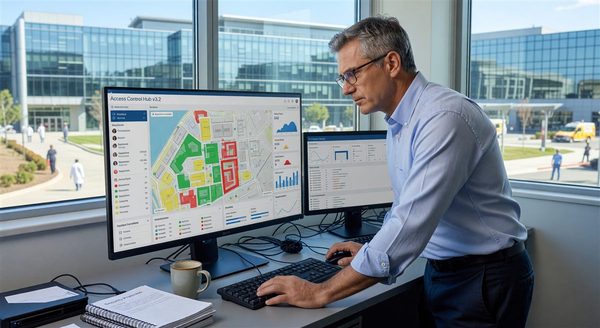
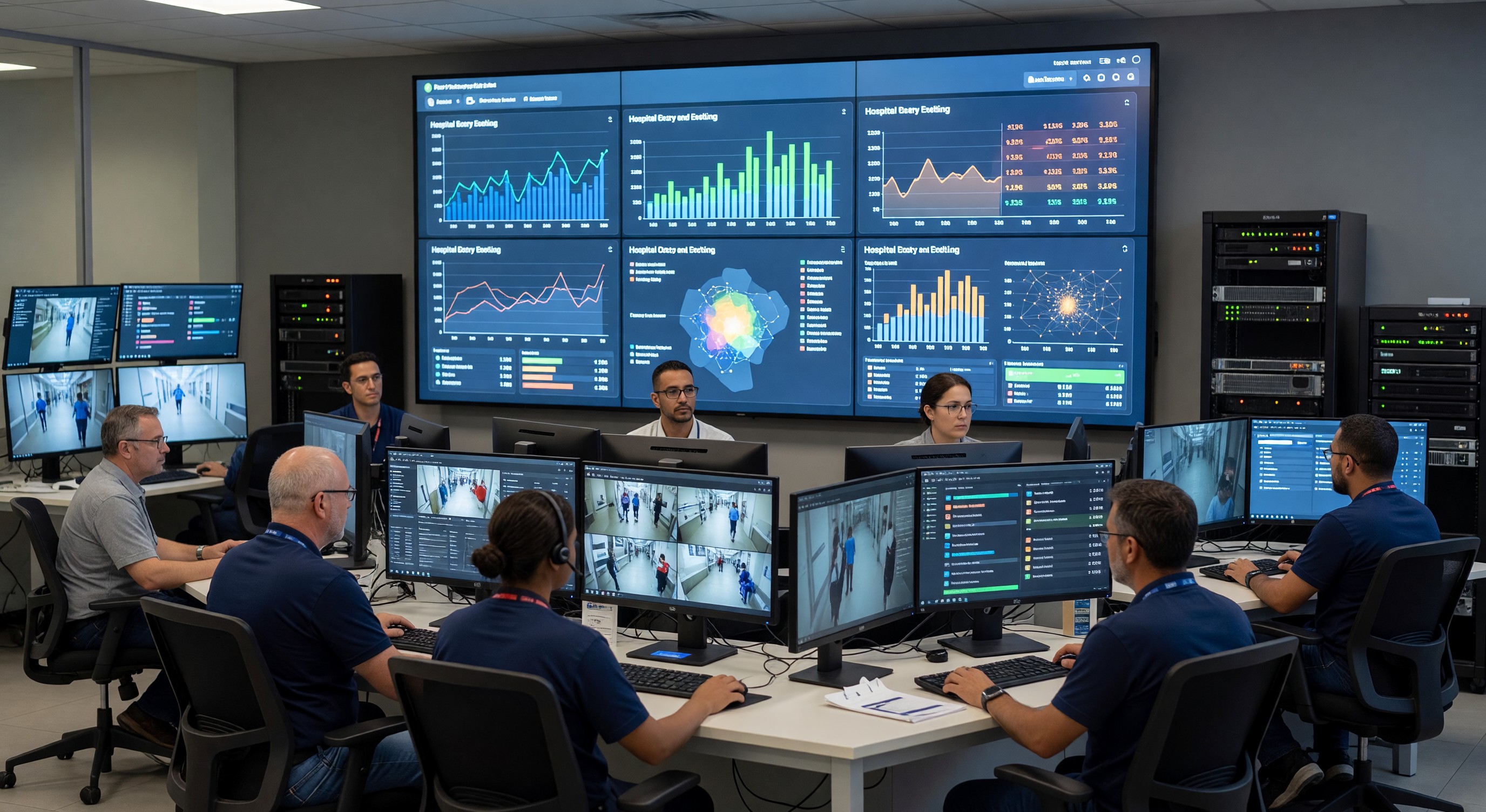
AI security analytics platforms ingest data from access control systems, video management systems, visitor management platforms, intrusion detection, and other physical security sources. Machine learning algorithms analyze this data to establish behavioral baselines and identify deviations that may indicate security risks.
Access Anomaly Detection Normal employee access patterns are highly consistent. A nurse who works day shifts on a medical-surgical floor badges into the same set of doors at predictable times. An anomaly detection system that has established this baseline can flag unusual access events: the same badge accessing medication storage at 3 AM when the nurse isn’t scheduled, or accessing areas unrelated to their care unit.
Anomaly detection doesn’t require pre-defined rules for every possible scenario. Instead, it learns normal patterns and flags significant deviations, surfacing potential credential sharing, unauthorized access, or insider threat indicators for human review.
Video Intelligence AI-powered video analytics can detect specific behaviors without requiring constant human monitoring: loitering in parking areas, object abandonment, tailgating through secured doors, altercations in corridors, and crowd formation at unusual locations. These detections generate real-time alerts that direct security staff attention to specific camera feeds rather than requiring continuous monitoring of hundreds of feeds simultaneously.
For healthcare facilities concerned about workplace violence under OSHA’s new healthcare workplace violence prevention standard, video analytics that detect pre-assault behaviors—agitated pacing, raised voices, physical posturing—allow intervention before violence occurs.
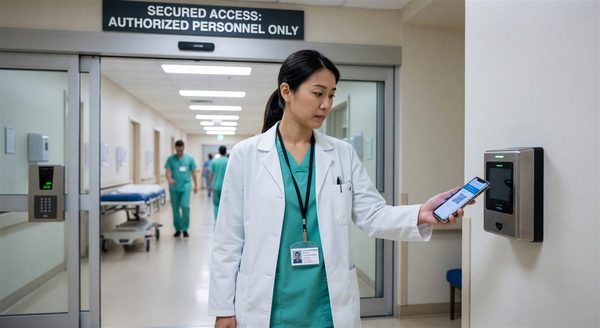
Identity Correlation Advanced analytics platforms can correlate access events with video data to verify that the person presenting a credential is the authorized credential holder. A badge scan at an emergency department entrance triggers a camera capture that is compared to the badge holder’s photo in the credential database. Mismatches generate alerts for security review.
Healthcare-Specific Applications
Infant and Pediatric Security Infant security systems in hospital maternity and pediatric units already use RFID tracking to detect infant abduction attempts. AI analytics augment these systems by monitoring access patterns that precede infant security events—unusual visitor registration patterns, credential anomalies in maternity unit access, tailgating at secured unit entrances.
Pharmacy and Controlled Substance Security Medication diversion is a persistent problem in healthcare facilities. AI analytics applied to pharmacy access logs can identify patterns associated with diversion: repeated short-duration accesses outside normal workflow patterns, access frequencies significantly higher than peers in similar roles, or access anomalies correlated with medication inventory discrepancies.
The Joint Commission’s medication management standards require that healthcare facilities maintain appropriate controls over medication access. AI analytics provides a systematic monitoring layer that traditional audit sampling cannot replicate.
Emergency Department Violence Prevention Emergency departments generate a disproportionate share of workplace violence incidents in healthcare. AI analytics systems monitoring ED waiting areas can detect escalating behavior patterns—patient or visitor agitation, raised voices, physical posturing—and alert security before situations escalate to violence.
Integration with the ED patient management system allows analytics platforms to flag access events associated with patients or visitors who have been previously identified as security risks, enabling proactive security presence for high-risk encounters.
Facilities-After-Hours Monitoring Healthcare campuses have facilities that are supposed to be secured during non-operational hours—research labs, administrative offices, storage areas. AI anomaly detection monitoring access to these areas outside normal business hours generates real-time alerts rather than relying on security patrol to discover violations.
Implementation Considerations
Data Integration Complexity AI security analytics platforms require data feeds from multiple security systems: access control, video, visitor management, intrusion detection. The integration effort—particularly in healthcare facilities with legacy systems from multiple vendors—is often the most significant implementation challenge. An integration assessment should precede platform selection to understand what data can realistically be made available.
Baseline Learning Period AI anomaly detection systems require a learning period—typically 30–90 days of normal operation data—before they can generate reliable anomaly alerts. Healthcare facilities implementing these systems should plan for a “quiet mode” learning period before activating active alerting.
Alert Fatigue Management AI security systems that generate too many false positive alerts quickly become counterproductive—security staff learn to ignore alerts that rarely indicate real threats. Calibrating alert thresholds to generate meaningful alerts without overwhelming operators is an ongoing process that typically requires 60–90 days of tuning after go-live.
Privacy and Data Use Policy AI-powered video analytics and access pattern analysis generate sensitive behavioral data about employees, patients, and visitors. Healthcare organizations must establish clear policies governing what data is collected, how long it is retained, who can access it, and under what circumstances it may be used. Employee communication about these policies prevents concerns about surveillance from undermining staff trust.
Regulatory and Compliance Dimensions
Healthcare security directors implementing AI analytics should consider several regulatory dimensions:
HIPAA Considerations If AI analytics systems access or process data that includes protected health information—such as accessing patient records to correlate access events with care team assignments—HIPAA Security Rule requirements apply. Most access control and video analytics systems don’t process ePHI directly, but integration with clinical systems changes the compliance picture.
Biometric Data Privacy Laws Several states (Illinois, Texas, Washington) have enacted biometric information privacy laws that require specific consent and data handling requirements for biometric data, including facial recognition used for identity correlation in access control contexts. Healthcare organizations in these states must evaluate their AI analytics implementations against applicable biometric privacy requirements.
OSHA Workplace Violence Rule OSHA’s healthcare workplace violence prevention rule, phasing in through 2025-2026, requires healthcare employers to identify and mitigate workplace violence hazards. AI security analytics that support workplace violence prevention documentation—incident trend analysis, hazard identification—can support compliance documentation for this requirement.
Frequently Asked Questions
How accurate are AI anomaly detection systems in healthcare access control, and what’s the false positive rate? Accuracy varies significantly by platform maturity and implementation quality. Well-implemented systems after 90+ days of calibration typically achieve false positive rates in the 2–5% range for access anomaly alerts. Video analytics for specific behaviors (tailgating, loitering) may have higher initial false positive rates that decline with scene-specific calibration.
Can AI security analytics platforms share data across multiple hospital campuses in a health system? Yes. Multi-site health systems are a primary use case for enterprise AI analytics platforms. Centralized analytics with system-wide behavioral baselines allow security operations centers to monitor multiple campuses from a single platform, with the ability to correlate anomalies across locations—identifying credential-sharing patterns that span campuses, for example.
What staff is needed to operate AI security analytics? Most mid-size healthcare security operations can run AI analytics with their existing security operations staff after appropriate training. The platform generates alerts for human review rather than replacing human decision-making. Larger academic medical centers with dedicated security operations centers may designate a specific analyst role for daily AI analytics review.
How do healthcare facilities handle AI security analytics findings that involve employee misconduct? AI analytics findings that indicate potential employee misconduct—credential sharing, medication access anomalies, after-hours unauthorized access—should be investigated through established HR and security investigation procedures. The AI system generates a lead for investigation; it does not establish guilt or justify immediate disciplinary action. Healthcare HR and legal counsel should be involved in establishing investigation protocols before the analytics system is activated.